Q1. What is the length of Gunter’s chain?
The length of Gunter chain is:
- A) 66 ft
- B) 100 ft
- C) 20 ft
- D) 90 ft
The Gunter chain is a geodetic instrument utilized for measurement purposes. It consists of 100 links, each measuring 7.92 inches in length, interconnected by brass metal rings. The overall length of the chain is 66 feet.
Step-by-step explanation
Gunter's chain is an instrument utilized for measurement purposes. It serves to quantify horizontal distances. The device is named in honor of Edmund Gunter, who created it in the year 1620.
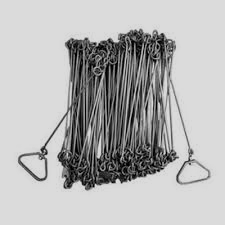
This chain measures 66 feet in length, which is equivalent to 20.1 meters. It consists of 100 links, organized into groups of ten. These links are connected using brass metal rings. Each individual link has a length of 201 mm. A quarter of this chain measures 16 feet 6 inches, corresponding to 5.03 meters. The measurements were also divided decimally.
Therefore, the overall length is 66 feet, and the
✅ Correct choice: (A) 66 ft
Q2. What is a survey foot?
The Origins of Measurement Systems
The distinction between the US Survey Foot and the International Foot has its roots in history. The US Survey Foot was initially defined in the Metric Law of 1866, which stated that one meter is equivalent to 39.37 inches. Shortly after, the United States established the yard to be equal to 3600/3937 meters. By performing some additional calculations, one can determine that one US Survey Foot corresponds to 1200/3937 meters or .3048006096.
Approximately a century later, to promote uniformity within the international community, the International Yard and Pound Agreement of 1957 defined the length of the international yard as .9144 meters. Consequently, an International Foot is precisely defined as .3048 meters, making it shorter than the US Survey Foot by two parts per million (2ppm).
US Survey Foot
N 187,441 * (3937 / 1200) = 614,962.68 sFT
E 757,050 * (3937 / 1200) = 2,483,754.87 sFT
International Foot
N 187,441 / 0.3048 = 614,963.91 iFT
E 757,050 / 0.3048 = 2,483,759.84 iFT
Is the distinction between the two substantial enough to warrant concern? The response should now be evident. Employing an incorrect conversion factor for this point would lead to an error of 2 feet in the northing and 6 feet in the easting. A discrepancy of two parts per million is quite considerable when dealing with the large coordinate values that are characteristic of plane coordinate systems!
Evidently, utilizing the incorrect conversion unit can lead to a notable and expensive mistake.
⚠️ Using wrong conversion can lead to 2 ft Northing, 6 ft Easting errors.
Q3. How many square Gunter's chains are there in 1 acre?
1 acre = ? square chains
- 100
- 10
- 1
- 1.67
Chain Surveying
- Chain surveying represents the most straightforward technique in the field of surveying.
- Measurements for this type of survey are conducted in the field, while additional tasks such as plotting and calculations are performed in the office.
- The measurements obtained in chain surveying are linear in nature.
- The tools necessary for chain surveying include a chain, tape, ranging rod, arrows, cross-staff, offset rods, and a plumb bob.
| Chain Type | Length | Links | Link Length |
|---|---|---|---|
| Meter chain | 20 m / 30 m | 100 / 150 | 20 cm |
| Engineering chain | 100 ft | 100 | 1 ft |
| Gunter chain | 66 ft | 100 | 0.66 ft |
| Revenue chain | 33 ft | 16 | 2 1/16 ft |
Measurements:
1 acre = 43560 sq. ft.
1 square Gunter's chain = 4356 sq. ft.
10 square chains = 43560 sq. ft.
Thus, 1 acre = 10 square Gunter's chains
Q4. What does "Chainage" refer to in construction surveys?

Construction surveys are detailed documents that outline the current characteristics of a land parcel before any construction begins. These surveys provide information about the existing structures on the site, as well as details regarding the slope, elevation, underground utilities, and more, utilizing advanced technology and intricate mathematical calculations.
Original Chainage Method
Historically, surveys were not as advanced as they are in contemporary practice. In the past, when measuring for extensive linear constructions such as roads, chains were employed to establish the road's position and determine its length. The term "chainage" continues to be relevant in surveying today, despite the significant improvements in measurement techniques brought about by technological progress.
The initial application of chainage in surveying utilized very basic technology—a chain consisting of 100 links. This method, created in 1620 by clergyman Edmund Gunter, proved to be remarkably accurate for its era. By employing a brightly colored pole positioned at the endpoint (such as the termination of a road), a surveyor would extend the chain, commencing from his location and progressing towards the pole. A stake would then be inserted into the ground at the chain's endpoint. The process would be repeated from the stake, resulting in a straight line marked out on the ground by the conclusion of the task. In contemporary practice, surveyors utilize significantly more accurate instruments and techniques that consider slopes and irregularities; however, the term "chainage" remains in common usage.
Contemporary Chainage
The term "chainage" in contemporary usage refers to the centerline of a linear structure, including roads or pipelines. It is utilized alongside the terms "elevation" and "offset" for the purpose of creating construction plans. The definitions of these terms are provided below:
- Chainage: As previously stated, chainage pertains to the centerline of the structure. Plans are typically illustrated from the perspective of the structure, facing the direction of increasing chainage. For instance, if a road measures 30 chains in length, the viewpoint would be directed towards the 30 mark from the 0 mark.
- Elevation: This refers to the vertical positioning of structures in relation to the chainage.
- Offset: This denotes the horizontal positioning of structures to the left and right of the chainage.
1 chain = 22 yards (66 ft). Traditional method replaced with accurate instruments, term still used.
A "chain" serves as a unit of measurement, equivalent to 22 yards (66 feet), which corresponds to the length of Gunter's chain.
Although the traditional chainage method is considered outdated, surveyors like Votex Surveying Company continue to utilize chainage in contemporary construction surveys.