Cryptocurrency — Introduction And Digital Currencies

What are Cryptocurrencies?

Cryptocurrencies are digital tokens. They represent a form of digital currency that enables individuals to conduct payments directly with one another via an online platform. Cryptocurrencies lack legislated or intrinsic value; their worth is determined solely by what individuals are prepared to pay for them in the marketplace. This differs from national currencies, which derive part of their value from being recognized as legal tender. Numerous cryptocurrencies exist, with Bitcoin and Ether being the most prominent.

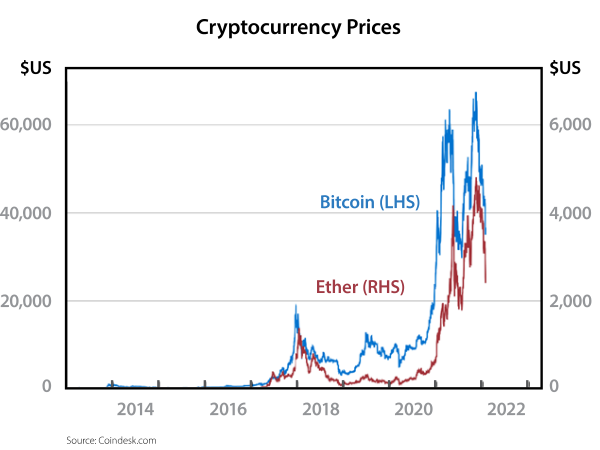
Activity within cryptocurrency markets has surged dramatically. The allure of these currencies seems to be driven more by speculation (purchasing cryptocurrencies for profit) rather than their function as a novel and distinct payment system. In connection with this, there has been considerable volatility in the prices of many cryptocurrencies. For instance, Bitcoin's price rose from approximately US$30,000 in mid-2021 to nearly US$70,000 by the end of 2021, only to drop to around US$35,000 in early 2022. Competing cryptocurrencies like Ether have shown similar price fluctuations. The remarkable interest in cryptocurrencies has also led to an increase in computing power dedicated to solving the intricate codes that many of these systems employ to safeguard against corruption. Despite the heightened interest in cryptocurrencies, there remains skepticism regarding their potential to supplant more conventional payment methods or national currencies.

Cryptocurrency

How Does a Cryptocurrency Transaction Work?

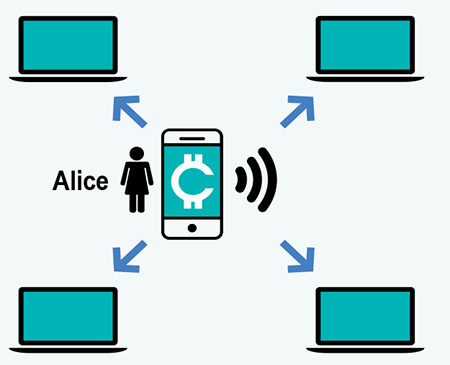
Cryptocurrency transactions are conducted through electronic messages that are disseminated across the entire network, containing instructions regarding the transaction. These instructions encompass details such as the electronic addresses of the parties involved, the amount of currency to be exchanged, and a time stamp.

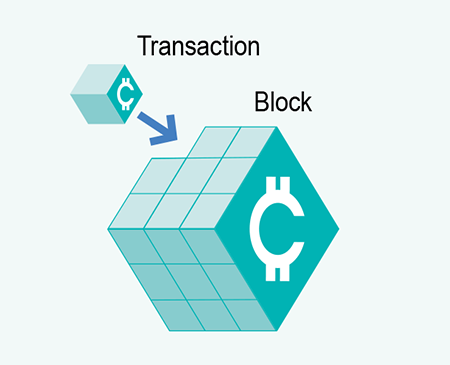
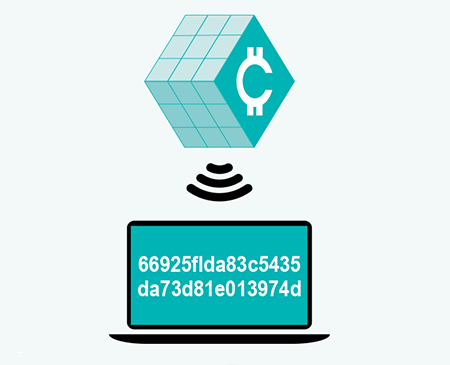
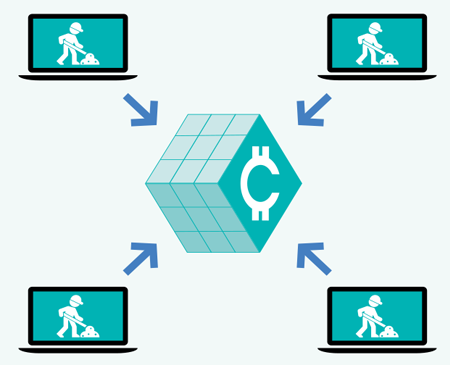
For instance, if Alice wishes to transfer one unit of cryptocurrency to Bob, she initiates the transaction by dispatching an electronic message with her instructions to the network, where it is visible to all users. Alice's transaction is among several others that have been recently submitted. Given that the system does not operate instantaneously, her transaction remains alongside a collection of other recent transactions, awaiting compilation into a block (which is essentially a compilation of the most recent transactions). The data from this block is converted into a cryptographic code, and miners compete to decipher the code in order to append the new block of transactions to the blockchain.

After a miner successfully decodes the cryptographic code, other network users verify the solution and reach a consensus on its validity. The new block of transactions is then appended to the end of the blockchain, thereby confirming Alice's transaction. (It is important to note that this confirmation is not immediate, as it requires the processing of six blocks of transactions to ensure that users can be confident their transaction has been completed successfully.)

Alice sends instructions to transfer cryptocurrency to Bob. Anyone using the network can view the message.

1 step-1

Miners group the transaction together into a 'block' with other recently sent transactions.

2 step-2

Information from the new block is transformed into a cryptographic code.

3 step-3

Miners compete to find the code that will add the new block to the blockchain.

4 step-4

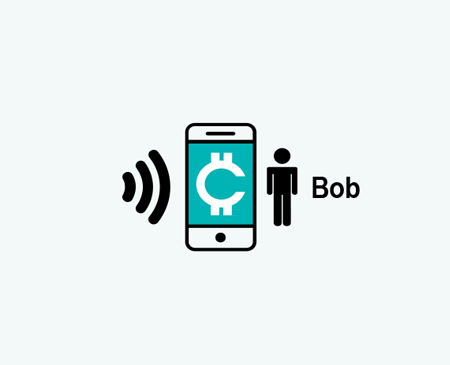
Once the code is solved, the block is added to the blockchain and the transaction is confirmed.

5 step-5

Bob receives the cryptocurrency.

6 step-6

Is Cryptocurrency Money?

A frequently asked question is whether cryptocurrency can be defined as ‘money’. The short answer is that cryptocurrency is not a form of money. To understand why, we can ask whether the characteristics of cryptocurrencies match the key characteristics of money:

  • Widely accepted means of payment – can cryptocurrencies be utilized for buying and selling? Typically, money exists in the form of a country's currency and is broadly recognized as a method of payment. Although cryptocurrencies can facilitate purchases and sales, they are not widely embraced as a payment method, and research indicates that only a small percentage of cryptocurrency owners use them consistently for transactions.
  • Store of value – can cryptocurrencies sustain their purchasing power (the ability to buy a similar set of goods and services) over time? Significant price volatility in many cryptocurrencies implies that their purchasing power is not preserved over time, which diminishes their role as a reliable store of value.
  • Unit of account – are cryptocurrencies a standard means of assessing the value of goods and services? In Australia, the pricing of goods and services is expressed in Australian dollars. While a few businesses might accept cryptocurrencies for payment, they are not typically employed to gauge and compare prices.

So, while cryptocurrencies can be used to make payments, currently their use as a means of payment is limited and they do not display the key characteristics of money.

However, there is one type of digital currency that could be considered money – digital currency issued by a central bank.

What is Central Bank Digital Currency?

A Central Bank Digital Currency (CBDC) can be best described as a digital version of cash. It is issued by the central bank, available to the public, and utilized for transactions between businesses and households. The national currency serves as the unit of account, and it can be exchanged at parity (i.e., one for one) with other monetary forms, including physical cash or electronic deposits held at well-regulated financial institutions.

What distinguishes cryptocurrencies from CBDCs? In other words, what qualifies a CBDC as money? A central bank can guarantee that a digital currency it issues possesses the three essential characteristics of money – meaning a CBDC could act as a widely accepted payment method, a store of value, and a unit of account.

Since it is issued by a central bank, a CBDC would hold legal tender status, ensuring its acceptance as a payment method. Additionally, a CBDC would serve as an equivalent store of value to other monetary forms, as it could be exchanged for an equal amount of physical cash or electronic deposits. Ultimately, the unit of account for a CBDC issued by the Reserve Bank would be the Australian dollar, allowing it to be used for measuring the value of goods and services. These and other significant features are summarized in the table below.

Features of Money: Cryptocurrency versus CBDCs
CHARACTERISTIC CRYPTOCURRENCIES CBDCs
Means of payment Accepted by a small number of retailers Universally accepted, legal tender
Store of value Tend to be volatile, depends on market price Stable, consistent with central bank price stability mandate
Unit of account Own unit of account Fiat currency (e.g. Australian dollars)
Governance Typically decentralised, relies on consensus between large number of entities Centralised
Transaction verification Typically a large number of competing entities Small number of trusted entities

Surveys conducted by the Bank for International Settlements indicate that CBDCs are an active area of research for nearly all central banks. Despite this, only a few central banks have actually issued digital currencies – to date no high income country has issued a CBDC. The Reserve Bank remains cautious about whether issuing a CBDC would be in the public interest. Primarily, this is because many of the benefits of CBDCs have largely already been realised by existing technologies. In a 2021 speech, the Head of Payment’s said:

Reserve Bank staff have not been convinced to date that a strong policy case has emerged in Australia for a CBDC. The primary reason has been that Australia’s existing electronic payments system already provides households and businesses with a wide range of safe, convenient and low cost payment services.

What Are Some of the Public Policy Implications?

Some of the technology behind cryptocurrencies brings forth several considerations for public policymakers. Due to the anonymity offered by cryptocurrency systems and their global reach, there are concerns regarding how to restrict the use of digital currencies in criminal activities. Moreover, the current intrigue surrounding cryptocurrencies may have contributed to the speculative nature of these markets, raising issues related to consumer protection. Should cryptocurrencies gain wider acceptance, they could also pose challenges for the banking sector's role and heighten financial stability concerns during a crisis. Additionally, the significant amounts of electricity consumed in cryptocurrency mining raise questions about resource allocation and the environmental impact of these payment systems.

For further details on the risks associated with cryptocurrencies, refer to ASIC’s MoneySmart website.

Conversely, a Central Bank Digital Currency (CBDC) could potentially fulfill various public policy goals, such as maintaining public trust in money and enhancing efficiency, safety, resilience, and innovation within the payment system. The Reserve Bank is actively reviewing the case for a CBDC and collaborating with other central banks on this matter. The Reserve Bank is assessing the pertinent technical aspects, along with the wider policy implications.

Although the Reserve Bank has not yet reached a conclusion regarding the issuance of a CBDC, the Governor mentioned in his 2021 speech ‘Payments: The Future?’ that:

The RBA is receptive to this possibility. However, up until now, we have not encountered a compelling public policy argument to pursue this path, particularly considering Australia's effective, rapid, and user-friendly electronic payments system. Nevertheless, it is conceivable that a public policy rationale could arise swiftly as technology advances and consumer preferences shift. Additionally, these tokens might present a more cost-effective option for certain payment types compared to the current technologies.

For further details on the Reserve Bank’s research, refer to: Central Bank Digital Currency.

Features of the Bitcoin System

The most recognized cryptocurrency is Bitcoin.

Bitcoin was introduced in 2009, following the release of a report detailing the Bitcoin system under the pseudonym Satoshi Nakamoto. The system was crafted to electronically replicate the characteristics of a cash transaction. It was intended to facilitate peer-to-peer (or person-to-person) transactions, eliminating the necessity to know or trust the other party involved, and to function without a central authority (like a bank).

In contrast to traditional national currencies such as the Australian dollar, which derive part of their value from being designated as legal tender, Bitcoin and other cryptocurrencies lack any legislated or inherent value. Instead, Bitcoin's worth is dictated by what individuals are prepared to pay for it in the marketplace (and theoretically, its value could plummet to zero at any moment).

A notable aspect of the Bitcoin system is that the supply of Bitcoins grows at a predetermined rate and is limited to approximately 21 million (with each bitcoin capable of being divided into 100 million satoshis or 0.00000001 bitcoins). Consequently, the supply of Bitcoins is often likened to that of a limited resource, such as gold.

The Bitcoin system enables transactions to take place directly between individuals without the need for a central authority (like a bank) to authenticate or document the transactions. This contrasts with most traditional payment methods, such as electronic bank transfers, which depend on a central entity to maintain and update transaction records. For instance, commercial banks keep a record of their clients' account balances, deposits, and withdrawals.

Instead, the Bitcoin network utilizes ‘blockchain’ technology to document transactions and the ownership of bitcoins. This technology essentially links groups of transactions (‘blocks’) together over time (forming a ‘chain’). Each time a transaction takes place, it becomes part of a new block that is appended to the chain. Consequently, the blockchain serves as a record (or database) of every bitcoin transaction that has ever taken place, accessible for anyone to view and update on a public network (commonly known as a ‘distributed ledger’). The security of the Bitcoin system is upheld by ‘cryptography’, a technique for verifying and safeguarding data through intricate mathematical algorithms (or codes). This renders the system extremely resistant to corruption.

Bitcoin transactions are validated by other users within the network, and the process of assembling, verifying, and confirming transactions is frequently termed ‘mining’. Specifically, intricate codes must be solved to validate transactions and ensure the system remains uncorrupted. The Bitcoin system escalates the complexity of these codes as additional computing power is employed to resolve them. A new block of transactions is generated approximately every ten minutes. ‘Miners’ are motivated to solve these codes and process transactions because they receive rewards in the form of new bitcoins (currently 6.25 new Bitcoins per block).

The rising competition among miners for new Bitcoins has led to significant increases in the amount of computing power and electricity needed (often utilized for air conditioning to cool computer systems). Although precise calculations are challenging, some estimates indicate that the annual energy consumption of the Bitcoin system is roughly equivalent to that of the country of Thailand.

This explainer aims to enhance your understanding of cryptocurrencies. It should not be interpreted as advice or a recommendation to purchase, trade, or invest in Bitcoin or any other cryptocurrency. Should you choose to trade or utilize cryptocurrencies, be aware that you may be assuming risks for which there is no remedy.
Real vs Virtual Wealth

Real wealth is tangible.

Virtual wealth fluctuates.